Premium series pitch, live workbench
The project has now pivoted from a premium documentary investigation to a premium scripted drama series. This live deck is being rebuilt around the new format: six rising icons across music, film, fashion, and digital culture, all accelerating toward the same invisible deadline, 27.
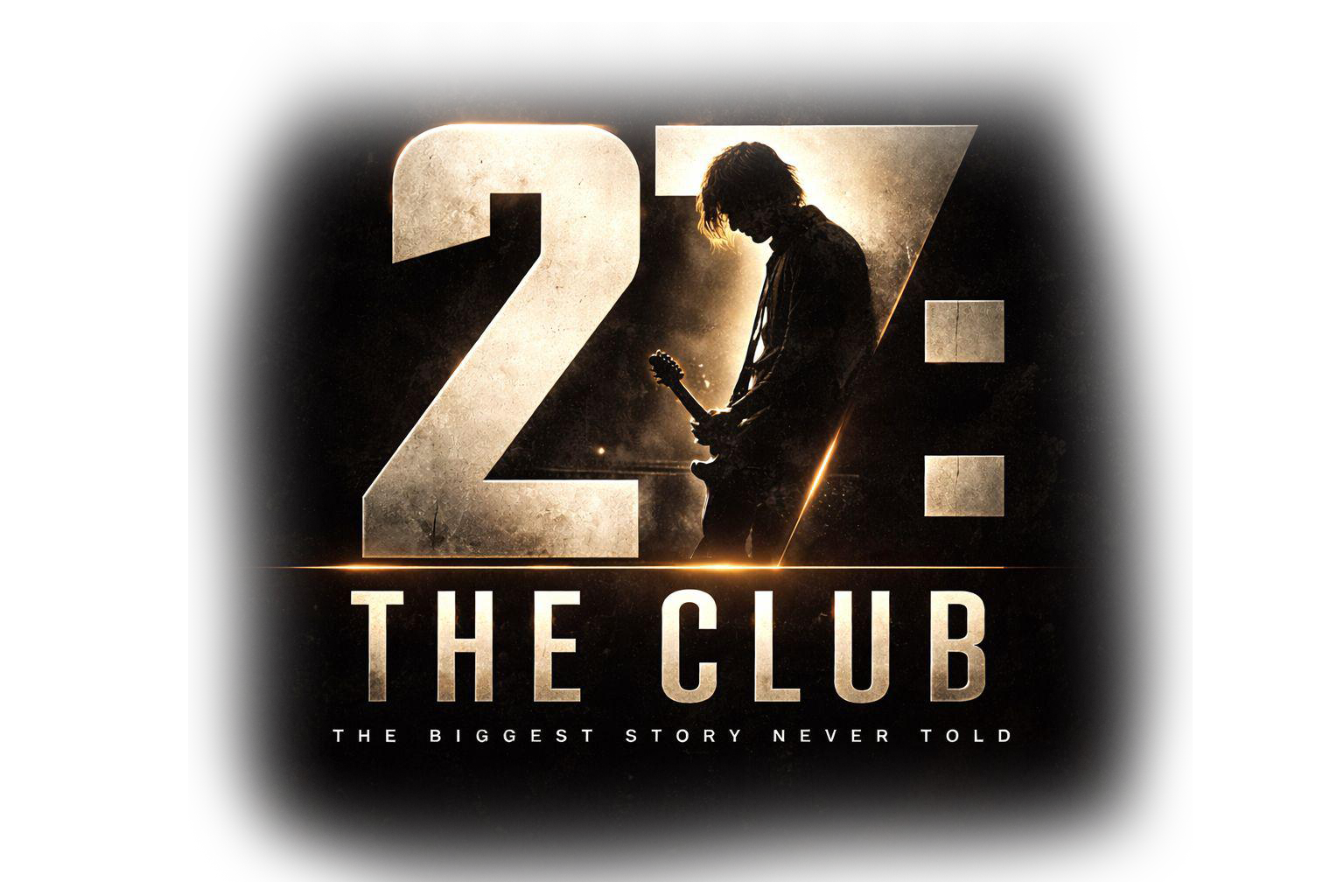
Six rising icons. One invisible deadline. A mythology that may still be alive inside the industry.
What if the 27 Club is not just history, but a system still operating in plain sight?
As six young stars rise toward global fame, they begin to mirror the same patterns, pressures, and disappearances that built one of culture’s darkest myths.
A premium ensemble drama about fame, identity, mythology, and survival.
Across a premium 9-episode first season, the series follows six emerging icons in music, film, fashion, and digital culture as they rise into global visibility and begin to realise they may be moving through a structure that has already consumed legends before them.
As fame pulls six rising icons deeper into the machine, the series asks who is being shaped into legend, who is profiting from the pattern, and whether anyone can understand the system before it finishes consuming them.
They do not begin connected. Fame connects them anyway.
Each episode pushes the six closer to the same fatal threshold, even when they still believe they are living separate stories.
New visibility feels like freedom, until it starts setting the terms.
Attention becomes hunger, and every rise begins costing something private.
The pattern stops feeling historical and starts feeling present.
Separate lanes begin to collide inside the same machine.
The closer they get to icon status, the less control they keep.
Season one becomes a fight to see the system clearly before it claims someone for good.
Inspired by the true cultural mythology of the 27 Club.
This series draws from the real cultural legend surrounding Brian Jones, Jimi Hendrix, Janis Joplin, Jim Morrison, Kurt Cobain, and Amy Winehouse, artists whose deaths at 27 transformed coincidence into one of modern culture’s most enduring myths. 27, The Club takes that inherited mythology and reimagines it as an original contemporary drama about fame, appetite, image, and survival.
Six legends created the myth. This series asks what that myth looks like now.
The series is not a set of literal biopics. It draws from the emotional, symbolic, and cultural legacy of the figures most associated with the 27 mythology, artists who came to represent rebellion, genius, vulnerability, excess, exposure, and irreversible public transformation. Their legacy becomes the conceptual blueprint for a new generation of fictional characters moving through a modern fame machine.
The 27 Club is not supernatural here. It behaves like a cultural operating system.
In this series, the mythology works because everyone already knows it. Artists fear it. Audiences romanticise it. Gatekeepers exploit it. The legend becomes part of the machinery itself, shaping ambition, image, appetite, and risk long before anyone can prove whether there is something darker underneath. That is how the myth stops being history and becomes an active force in the present-day story.
The question is not whether the legend is real. It is whether these six can see the pattern early enough to survive it.
Each character enters the story chasing something recognisable, success, love, freedom, control, reinvention. Over the season, those ambitions collide with the same emerging truth: the closer they get to icon status, the more clearly the old pattern begins to repeat around them. The engine of the series is not passive tragedy. It is the fight to understand the system before it turns them into its next story.
In this world, fame does not reveal the self. It manufactures a version the system can own.
The moment these people become culturally valuable, they become easier to package, direct, protect, exploit, and replace with their own image. That is the engine underneath the rise: public success creates private distortion, and the more iconic someone becomes, the less control they keep over what they are turning into.
Different careers, same pressure pattern.
Whether they come through music, film, fashion, or digital culture, the same forces begin closing in: management, media, commerce, public ownership, dependency on attention, and the steady erosion of any private self. That repetition is what tells us this is not random damage. It is a system.
The first season tracks ascent, fracture, and the dawning recognition that the pattern may be engineered.
By the finale, the six are no longer separate stories. They are part of the same design, whether they accept it or not.
If the first season breaks the myth open, the next chapter becomes the fight over who controls it.
The concept has clear continuation potential, but the first season stands on its own as a complete premium drama with deeper mythology, power shifts, and survival stakes still to come.
Dark, elevated, psychologically controlled.
The series should feel seductive, expensive, and emotionally dangerous, closer to a premium psychological drama than a music biopic or a supernatural thriller. It should move with confidence, restraint, and dread, letting glamour, intimacy, ambition, and collapse sit in the same frame without tipping into camp. The tone needs to hold two truths at once: the world is intoxicating enough to understand why people chase it, and corrosive enough to understand why it destroys them.